Participants at the international conference on ICT for Africa (ICT4A) have widened the nature and scope of research in Africa. This was the objective of the 3rdInternational Conference on ICT for Africa with the theme: Sustaining the Momentum and Extending the Reach. Participants at the conference raised issues on how we can sustain the present developmental momentum in Africa as well as extending the reach of ICT to the unreached.
This conference like its predecessors pulled together an important core of researchers to debate on the adoption, use and impact of ICTs in developing countries. There was a special focus on ICT and agriculture presented in a key note speech by the former president of the Federal Republic of Nigeria His Excellency Chief Olusegun Obasanjo on the theme: Empowering Africa for Food Production in the Information Age. A number of new ideas on the opportunities and challenges of using ICTs in education, business and healthcare were also shared. The next conference, ICT for Africa 2012 was announce for Uganda at the Makerere Business School on the 21-24 of March 2012. The call for papers is open. For more information go to www.ictforafrica.org


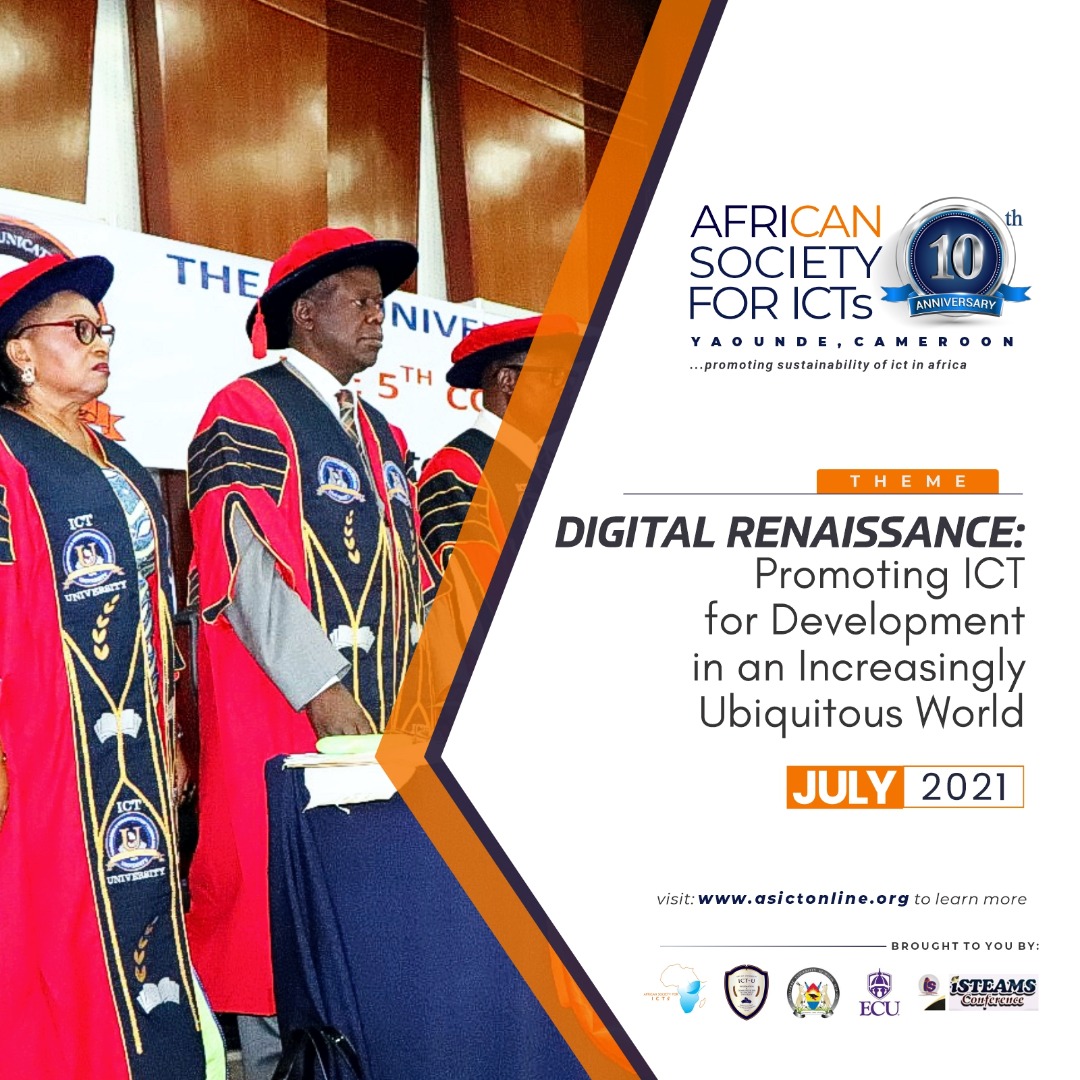
The African Society for Information & Communication Technology (ASICT) is a society pioneering and promoting the participation of information technology and allied professionals in the growth and development of ICT in Africa. The association creates a forum for addressing the multi-prong challenges of Africa through ICT-based solutions which have contextual and cultural relevance. We seek to increase the influence of IT and Allied professionals among decision-makers in Africa by using collaboration and mentoring as viable tools for promoting informed policy on national and international ICT issues.
A plethora of information and communications technology (ICT) and management scholars and practitioners have suggested the need for human capacity development for the ICT domain in developing economies. Empowering these economies to develop the right solutions with contextual and cultural relevance requires institutions to educate and train graduates to meet their contemporary needs. Most developing economies face challenges in establishing and sustaining ICT degree programs, namely, the acute lack of qualified faculty and the exodus of the few graduating talents to the West. Further, some existing degree programs may be considered to be more of an adoption rather than the adaption of content from universities in developed countries, usually North America and Europe. In essence, these economies need to move from being primarily consumers of the information age to becoming producers of ICT and management knowledge, products and services. The ICT University (ICT-U) is a plausible solution to the aforementioned challenges.